Sleep & Stress Support
Circadian Bedroom Lighting for Couples
Use morning light, dimmer evenings and partner-friendly bedroom choices to support a shared sleep routine without overpromising results.
Read with context
This guide is designed to help you ask better questions and make practical choices. It does not diagnose, treat, or promise a cure.
Light timing matters more than a product label
Circadian lighting is a way of managing light exposure across the day. The National Heart, Lung, and Blood Institute describes light as the strongest environmental signal for the sleep-wake cycle: brighter daytime light and dimmer evenings can help align that rhythm.
A lamp or smart bulb cannot guarantee better sleep or greater intimacy. The practical value is in creating shared cues—brighter mornings, calmer evenings and darkness at night—that both partners find comfortable.
Plan morning, evening and nighttime light
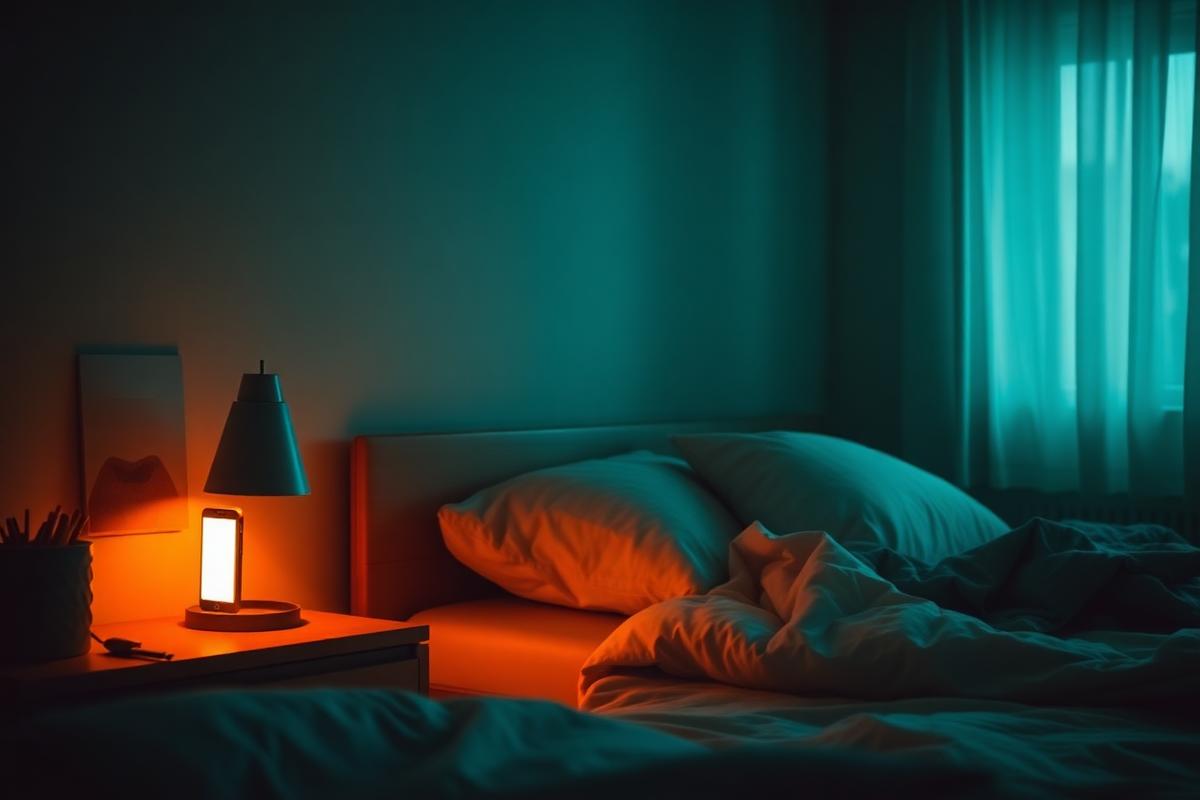
Use daylight or bright indoor light after waking when practical. In the evening, reduce harsh overhead light and screen brightness, then choose warmer, lower-level light for ordinary tasks. At bedtime, block unwanted outside light while keeping a safe route to the bathroom.
Consistency matters more than automation. A basic lamp on a timer, curtains and a shared screen cutoff may be enough. Smart bulbs can make changes easier, but they do not replace regular sleep timing or evaluation for a sleep disorder.
Design for two different sleepers
Partners may have different schedules, vision needs and sensitivity to light. Use separate bedside controls, directional reading lamps, eye masks or low-level path lights so one person's routine does not remove the other's choice.
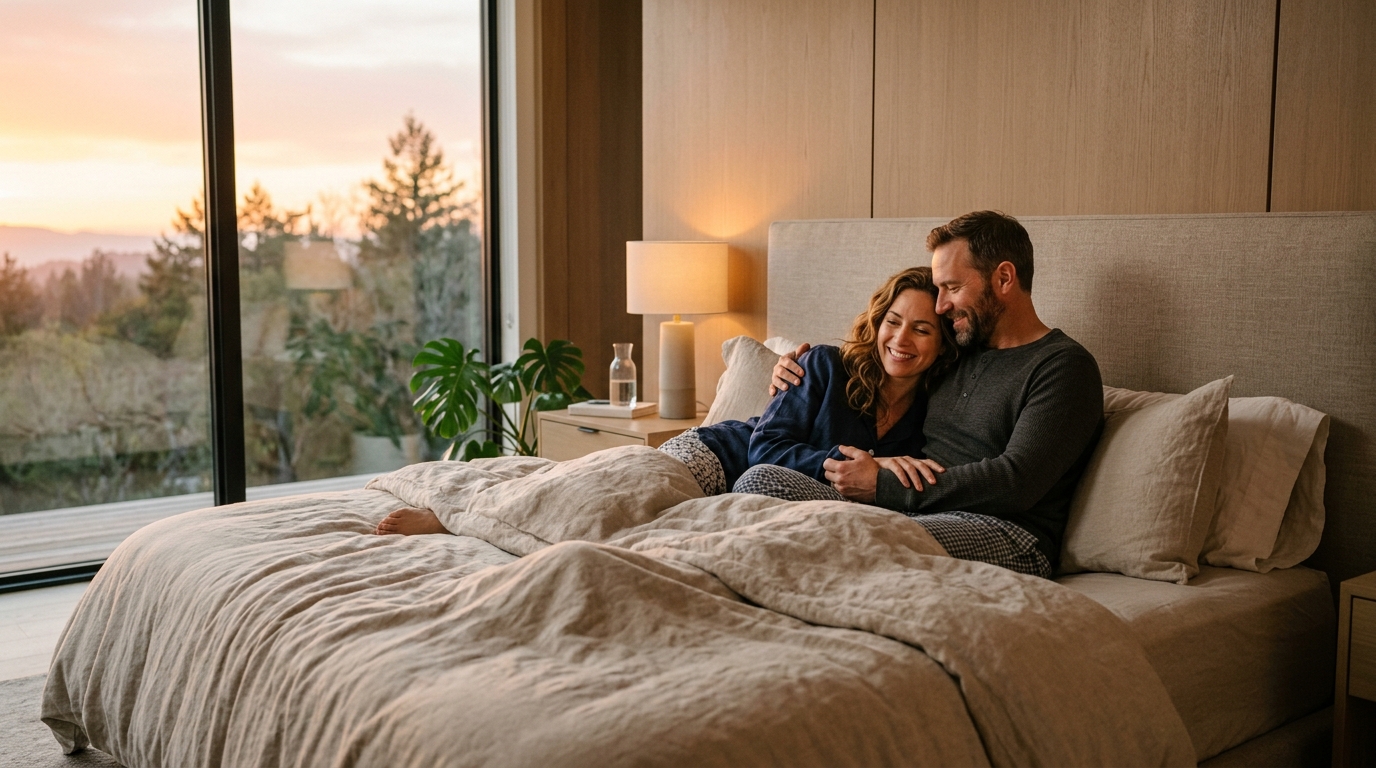
Talk about what each person needs before changing the whole room. A gentle evening ritual can create connection, but neither partner should be expected to stay awake, wake early or tolerate unsafe darkness to match the other.
Make the bedroom routine safe and workable
Use enough light to move safely, especially around steps, cords and the route to the bathroom. If one partner needs more light than the other, use separate controls or an eye mask rather than forcing one setting.
Persistent insomnia, excessive daytime sleepiness or a sleep schedule that remains difficult to control may need professional assessment. Timed bright-light therapy can affect the body clock and should be discussed with a clinician when a sleep disorder, eye condition or medication could matter.
Evidence and further reading
Sources
We prioritize official health bodies, regulators, and other primary sources when reviewing wellness guidance.
- 01National Heart, Lung, and Blood Institute — Your Sleep/Wake Cycle (opens in a new tab)
Official explanation of circadian clocks, light-dark cues and the effect of bright artificial light late in the evening.
- 02National Heart, Lung, and Blood Institute — Circadian Rhythm Disorders Treatment (opens in a new tab)
Official guidance on managing light exposure and clinician-guided light therapy for circadian rhythm disorders.